INDIVIDUAL
PROGRAMMING
STANDARDS
The Tarlona coaching process operates through a defined sequence of steps, each stage producing documented outputs that inform the next. No stage is optional or abbreviated.
From Enquiry to Ongoing Programme.
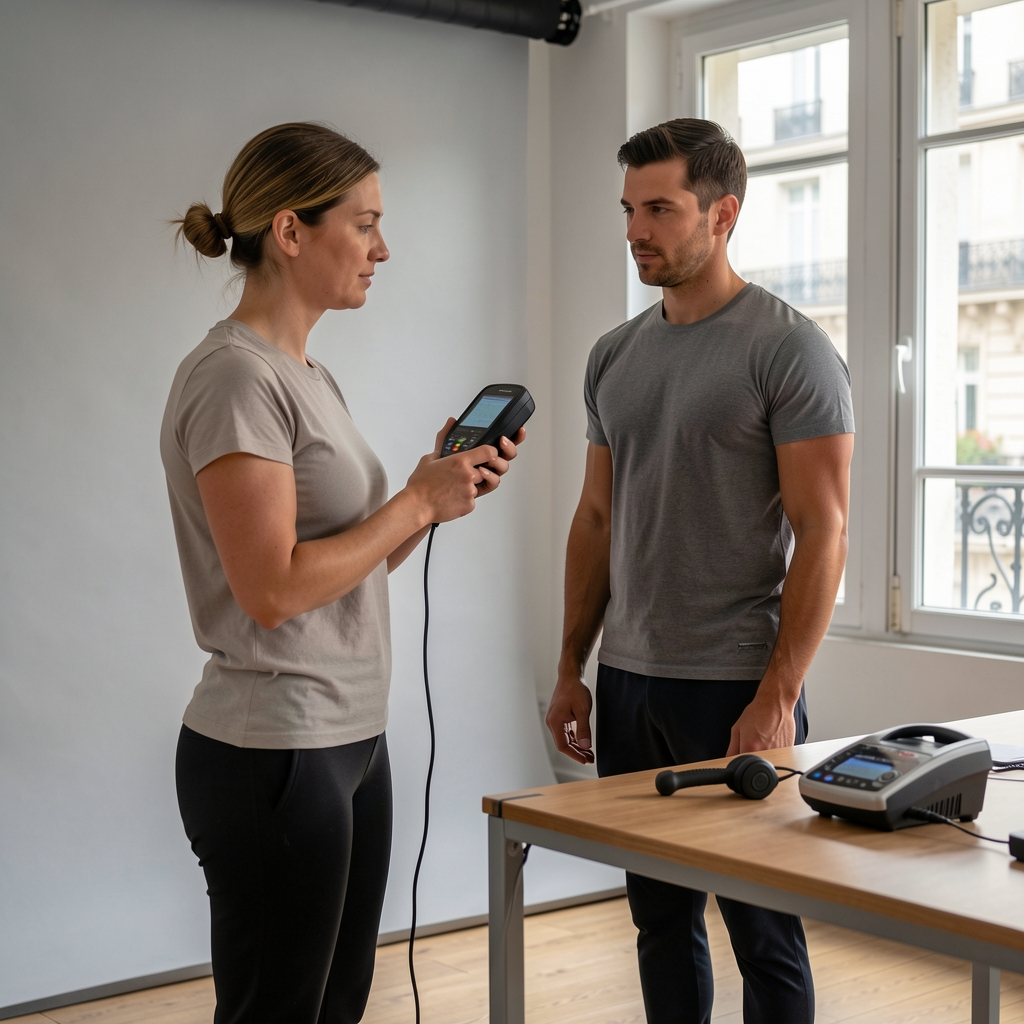
Movement Screening
The first in-studio session is dedicated entirely to movement observation. Seven fundamental patterns are assessed using a standardised scoring methodology. Results are documented in numerical form and stored in the individual file.
45 minutes
Scored movement profile document

Baseline Assessment
Following the movement screen, a structured baseline is established: body composition recording, cardiovascular baseline test (where relevant to programme goals), strength entry points across primary movement categories, and a goal-setting conversation.
30 minutes
Baseline data record; initial training log entry
Goal-Setting Framework
Goals are discussed within the framework of what the assessment data suggests is achievable over the planned programme block. Timelines are set around the programme duration, not the individual's aspirations in isolation. Goals are documented and signed off by both the coach and the client before programming begins.
Integrated into session 1
Signed goal-setting document; programme brief

Programme Build
The assigned coach produces a periodised programme within three business days of the assessment. The programme specifies: session frequency, movement selection, weekly set-and-rep structure, load progression rules, deload timing, and any corrective work arising from screening findings. The complete programme document is shared with the client before the first coached session.
Within 3 business days
Complete periodised programme document

Session Delivery
Coached sessions are delivered in accordance with the programme. Each session is led by the assigned coach, who observes and corrects form, records load and volume data, notes any deviations from the planned session, and logs a subjective effort rating. The session log is updated before the client leaves the studio.
60 minutes per session
Updated session log; load and volume record

Progress Check-in
At the four-week mark within each programme block, a formal progress check-in takes place. This reviews session log trends, subjective wellbeing indicators, and any changes in the individual's schedule or objectives. Findings are written up and shared. Programme adjustments arising from the check-in are documented and implemented from the following session.
Every 4 weeks
Written progress summary; any programme amendments

Block Reassessment
At the end of each programme block (8 or 12 weeks), a full reassessment takes place. Movement patterns are rescreened, body composition is remeasured, and performance benchmarks against the baseline are reviewed. The reassessment outputs inform the design of the next block. If goals have been met, new objectives are set. If the trajectory is ahead of schedule, the programme is escalated accordingly.
End of each programme block
Full block report; next-block brief

Studio Standards.
Evidence-Informed Methodology
All programming decisions at Tarlona reference published exercise science research. The studio maintains a structured continuing professional development calendar, with each coach completing a minimum of 20 hours of accredited CPD per year.
Where the published evidence on a specific programming question is contested, the coaching team adopts the most conservative and well-supported position. Speculative approaches are not applied to client programmes.
Document Retention Policy
All client records — assessment data, session logs, progress summaries, and goal-setting documents — are retained for a minimum of three years from the end of the most recent programme block. Records are held securely and in accordance with the studio's data management framework.
Clients may request access to their own records at any time during or after their programme engagement. Requests are fulfilled within five business days.
Session Cancellation Protocol
Clients may cancel or reschedule a booked session with a minimum of 24 hours' notice without charge. Cancellations with less than 24 hours' notice are counted as a completed session for programme block purposes unless the reason is a documented acute circumstance.
Coach cancellations by the studio are rescheduled without deduction from the session block. Advance notice of planned studio closures is communicated in writing no less than five business days in advance.
Coach-to-Client Consistency
Each client is assigned a single primary coach for the duration of their programme block. Coaching sessions are not interchangeable across the team without a formal handover process. In the event that a primary coach is unavailable, a substitute session is delivered by a second coach following a documented brief from the primary, and all session data is shared.
Formal coach reassignments are handled at block boundaries, not mid-block, unless requested by the client.
Active Recovery in Programme Design.
Active recovery is a scheduled component in every Tarlona programme, not an afterthought. Rest days are not simply empty calendar slots — they are structured around low-intensity movement (walking, light mobility, pool sessions), sleep quality monitoring, and subjective energy rating inputs from the client.
Deload weeks are built into every 8-week block: typically at the end of week four and week eight. During deload weeks, session intensity is reduced by approximately 40% and session volume by 30-50%, depending on the individual's accumulated fatigue indicators from the training log.
The studio provides each client with a rest-day routine document as part of the initial programme delivery. This covers morning movement sequences, recommended low-intensity activities, sleep environment guidance, and hydration scheduling.
Week 4 & 8
Per 8-week block
30 – 50%
Based on accumulated fatigue log
Written Brief
Delivered with every programme block
Methodology FAQ.
The primary distinction is in the sequence. Most general fitness programmes begin with movement selection and load, without a prior screening stage. The Tarlona process requires assessment data before any programming is produced. This means that movement selection, load starting points, and session structure are all derived from the individual's actual capacity, not from a standard template adjusted for self-reported fitness level.
Adjustments during a block are made by the coach, not the client. If session log data or a check-in review indicates that the current programme is mis-calibrated — too conservative or progressing ahead of schedule — the coach proposes specific amendments in writing. Changes are confirmed with the client before implementation. Ad-hoc adjustments made unilaterally by the client to their own programme are noted and discussed at the next check-in.
Yes. Temporary programme variants are available for travel, injury recovery, or other circumstances that limit studio access. These variants are produced by the assigned coach and designed to maintain training stimulus with the available equipment. They are logged separately within the session record and re-integrated into the main programme when full access resumes.
Programme fees are discussed during the initial enquiry review and confirmed before the assessment session takes place. Fees cover the full programme block: the assessment, the written programme document, all coached sessions, all progress check-ins, and all documentation. There are no additional charges for programme amendments, check-in summaries, or rest-day guides.
Tarlona coaches provide general lifestyle and nutrition guidance as part of every programme. For individuals with specific dietary requirements or objectives beyond the scope of general lifestyle coaching — including sport-specific fuelling or identified dietetic requirements — the studio maintains a referral list of qualified nutrition professionals in Paris with whom we have established working relationships. Referrals are made at no cost and with the client's consent.
Reserve an Initial Assessment.
The Tarlona process begins with the screening session. Submit an enquiry and the studio team will confirm available assessment times within one business day.
Contact the Studio